
Experts agree with the assessment that the Budget next month would respond to the predictions of deficient monsoon rains with a policy package. According to them, rain-fed areas, which are likely to be affected by a 'below normal' monsoon, could see increase in allocation in terms of higher spending through the public distribution system and the National Rural Employment Guarantee Scheme.

The wholesale inflation rose to a 13-month high of 1.26 per cent in April fuelled by rising prices of food articles, especially vegetables, amid expectations of RBI holding interest rates in the policy review next month. The wholesale price index (WPI) based inflation has been rising for two months in a row.

Raghuram Rajan said a six-member monetary policy committee will decide on interest rates.

Rainfall in August is predicted to be below normal (less than 94 per cent of LPA), but the situation is expected to improve comparatively in September, the IMD said.

The benchmark index on Wednesday surged 314.92 points or 1.05 per cent to close at 30,248.17 on widespread buying spurred by forecast of a normal monsoon this year.

As India's electricity demand soars, the power ministry on Tuesday reviewed the power supply situation to ensure 'zero load shedding' during the summer months. The ministry has drafted plans ranging from delaying planned maintenance of thermal power stations to mandatory operations of imported coal-based and gas-based stations till September. In a series of meetings with industry stakeholders, Union Minister for Power, New, and Renewable Energy R K Singh emphasised the importance of adequate planning to avoid situations where one state has surplus power while another state faces shortages.

The stock of Mahindra & Mahindra (M&M) has been touching successive all-time highs on the bourses and, over the past year, gained 81 per cent. While the S&P BSE Auto Index has not performed poorly, registering gains of 73 per cent, it still trails the company by 800 basis points (bps) during this period. There are multiple reasons why investors are beating a path to M&M's counter.
There is increased risk for agriculture in India from the monsoon after drought ravaged the country in 2002, forecast the Summer Outlook report of Salomon Smith Barney made available Monday.

Recent estimates show that foodgrain production in 2016-17 has touched a new record of 273.4 million tonnes or 8.7 per cent higher as compared to last year.

After a steady surge, prices of pulses, except those of urad and masoor to some extent, are showing signs of stabilising amid a revival of monsoon rains over major growing areas of Maharashtra and Karnataka, and on expectations of a rise in imports. Chana prices, which too had moved up in recent months, have dropped by almost 3 per cent since the end of August due to increased liquidation of government stocks, official data shows. Monsoon rains seem to have benefitted the standing soybean crop as well.

States have been told to prepare in advance to counter any impact of an adverse southwest monsoon.
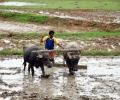
Any long dry spell could cause moisture stress in the standing crop during the crucial maturing stage and also make it prone to pest and disease attacks.

Timely onset of south-west monsoon is crucial for kharif (summer) crops.

Indian economy grew 7.9 per cent in the March quarter.

Mumbai and certain adjoining areas experienced pre-monsoon showers, sources said on Sunday.

Climate change has hampered the ability of the forecasting agencies to accurately predict severe events and weather bureaus across the world are focusing on augmenting the observational network density and the weather prediction modelling to improve predictability, India Meteorological Department (IMD) Director General Mrutyunjay Mohapatra has said.

India's leading commodity exchange, National Commodity and Derivatives Exchange (NCDEX), and private weather forecasting company Skymet took a significant step towards launching the country's first tradeable weather index on Monday (August 14) by entering into an agreement to deepen their understanding of the impact that weather has on agricultural commodities. The memorandum of understanding (MoU) between NCDEX and Skymet is a profound step in the direction of linking farmers with the weather in a scientific way, according to an official statement. Sources indicate that NCDEX and Skymet will conduct workshops and seminars across the country to educate farmers about how they can scientifically use weather forecasts to hedge risks.

In many parts of central and north India, monsoon reaches only in July.

Kansai Nerolac Paints has seen its market capitalisation (mcap) erode by over 5 per cent since May 3 after posting a subpar performance in the fourth quarter of 2023-24. Weighed down by stiff competition, the company has shed Rs 1,172 crore over the past two weeks in mcap. India's largest paint maker in terms of mcap, expects double-digit growth in the industrial segment and aims to maintain margins, but its performance in decorative paints could suffer amid competition.

India is set to experience extreme heat during the April to June period, with the central and western peninsular parts expected to face the worst impact, the IMD said on Monday as the country prepares for seven-phase general elections from April 19.
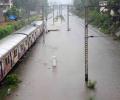
Waterlogging has been reported in several parts of city.

Monsoon is likely to be below normal in the current year at 93%.

'Urbanisation results in heavy rainfall events.'

Less-than-expected rainfall and a poor spatial distribution, experts say, can rekindle fears of a rise in food and fuel inflation that can have an impact on the RBI's monetary policy. The fear of less than optimal rainfall due to El Nino this year, analysts believe, is the biggest short-term risk for the markets, which they said has not been fully priced in yet by them. Monsoon set over Kerala on June 08, a week later than its scheduled date.

Bringing in the much-needed respite from the hot and humid conditions, the monsoon arrived in Mumbai with heavy showers lashing the city Thursday night and Friday morning.

Analysts are divided on their retail price inflation forecast, with some saying the first quarter numbers will overshoot the RBI target by as much as 60 bps while others are softer in their estimate. Consumer price inflation retreated from its 15-month peak of 7.4 per cent in July to 6.8 per cent in August, much lower than the market expectations, despite vegetable prices remaining elevated at 26.1 per cent. Food inflation eased to 9.9 per cent from 11.5 per cent, led by some cooling of inflation in vegetables, cereals, pulses and milk.

The monsoon rains are crucial for farm output and economic growth as about 55 per cent of the south Asian nation's arable land is rain-fed.

This may rescue pulses, cotton and oilseed sowing; rain revival in the south to take longer
The overall FPI inflows should move into the range of $15-20 billion in fiscal 2017 with equity dominating with $10-15 billion and debt with $5 billion

'It is the most prone month for the development of cyclones in the pre-monsoon period.'

Deloitte India on Friday said it estimates India's GDP growth at 6.6 per cent in the current fiscal helped by consumption expenditure, exports rebound and capital flows. In its India's economic outlook report, Deloitte said the rapid growth of the middle-income class has led to rising purchasing power and even created demand for premium luxury products and services. With the expectation that the number of middle-to-high-income segments will be one in two households by 2030/31, up from one in four currently, we believe this trend will likely become further amplified, driving overall private consumer expenditure growth, it said.

The Indian economy is projected to grow at 6.3 per cent in current financial year aided by investment and domestic demand. According to a World Bank report released on Tuesday, India continues to show resilience against the backdrop of a challenging global environment. In India, which accounts for the bulk of South Asia region, growth is expected to remain robust at 6.3 per cent in 2023-24, India Development Update of the World Bank said.
CPI inflation slowed to 9.39% in April compared with 10.39% in March.
The downward surprise in Q2 stemmed from a stronger-than-anticipated drag from gross fixed capital formation and marginal weakness in private final consumption expenditure. In Q3, projection errors emanated mainly from a steep unanticipated contraction in gross fixed capital formation, which was the deepest in the new series of GDP.

A good monsoon would translate into demand pickup across multiple sectors.

Prime Minister Narendra Modi on Monday chaired a high-level meeting to review preparedness for the hot weather condition in the upcoming summer season and called for preparing separate awareness material for different stakeholders like common citizens, medical professionals, local body authorities and disaster response teams.
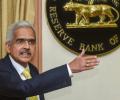
In the second policy review under Governor Shaktikanta Das, the six-member Monetary Policy Committee voted 4:2 in favour of the rate cut.

We had prepared a contingency plan for 580 districts, the minister said.
